Ageless Lifestyles®

Ageless Lifestyles® Radio

Get Your 3 Free Anti-Aging Gifts!

1. Free Report: The 3 Most important Secrets to a Youthful Life
2. The Defy Aging Newsletter
3. Eight ageless email mini-lessons

Name:
Email:
  • Pages

  • Anti-Aging Positive Psychology

    Holistic Health Wellness

    At the Ageless Lifestyles Institute, Dr. Michael Brickey and associates help people grow young and live with purpose. The Institute provides research, motivational seminars, speaker services, publishing, and life coaching for holistic health and wellness, & anti-aging psychology.

    "Change can be quick, easy, and painless when you know how to engineer it," says Dr. Brickey. To learn the psychology of a youthful mindset at every age men click here / women click here.

    Want anti-aging research on holistic health, positive psychology and wellness? We have anti-aging articles, newsletters, press releases, and news and news and media interview information.

  • Meta

    • Categories

  • Books & CDs


    • 52 Baby Steps to
      Grow Young

    • Featured on
      Oprah and CNN

    • Anti-Aging Hypnosis CDs
  • Archive for the 'story telling' Category

    Better Storytelling: Better Aging
    Posted by Dr. Brickey on 15th March 2010

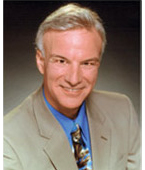
    Anti-Aging Psychologist, Dr. Michael Brickey

    Simmons

    Host: Anti-Aging Psychologist Dr. Michael Brickey

    Guest: Annette Simmons

    Broadcast and podcast starting: March 1, 2010 on webtalkradio.net. After 3-8-10 the podcast is also on the links below
     
     Better Storytelling; Better Aging: Play NowDownload
    (to download, right click download and select “save target as.”)

      Dr. Mehmet Oz says “by the time we are 50, two-thirds of how we age will be determined by lifestyle.” The goal Ageless Lifestyles® is to help you live a longer, healthier, happier life. One of the biggest challenges with aging is reinventing a sense of purpose and contribution as we age. I know it may sound strange, but I believe becoming a better storyteller is very helpful with longevity, health, and happiness. Let me count the ways:

    · By helping you be more successful at communicating your ideas and influencing people, you are better able to follow your purpose and succeed at your goals.

    · Becoming a good storyteller promotes you to a family matriarch or patriarch, championing the family traditions and values you love in a way that captures the minds and hearts of family members of all ages.

    · Storytelling develops a sense of confidence and efficacy.

    · It’s fun.

    So what did Annette Simons teach us about storytelling? It is easy to think, I would like to be a good storyteller, but I don’t have any stories. She points out we have all had life crises, challenges and transitions, and thus we all have stories. How to find them? She breaks it six kinds of stories:

    1. Who am I?
    2. Why am I here?
    3. Teaching
    4. Vision
    5. Values in action
    6. I know what you are thinking

    While some storytellers have different classifications, Annette Simmons’ system in especially well suited for everyday living, thinking about aging, as well as business. Let’s focus on aging. The who am I? stories are especially important as we update our identity when we experience life transitions and health challenges. It can vary from the somewhat negative why me? to the more positive what now? Life transitions and challenges also prompt why am I here? stories to update our purpose. Teaching stories are especially important for how we view aging. An example is the story I told about the 94-year-old man who believed he was 64. Vision stories look at the big picture and purpose. Values in action stories are particular important in aging in making sure people don’t write off seniors as obsolete or irrelevant but view seniors as having a lot to contribute. Finally, I know what you are thinking stories are marvelous for acknowledging skepticism and differences, starting where the listener is, and leading them to considering possibilities that they usually would rule out.

    So how do you become a better storyteller? The starting point is believing you have stories to tell and looking for them. I find it helpful to write stories down shortly after they happen as it is easy to forget the details that add to the richness of a story. Annette Simmons Whoever Tells The Best Story Wins is very helpful in identifying and generating stories. She encourages us to tell them to supportive audiences who give feedback on what they liked. Then it is a question of practice, practice, practice—and carefully watching the responses you get.

    Ms Simmons’ website is www.groupprocessconsulting.com. Dr. Brickey’s other websites are www.DrBrickey.com and www.Anti-Aging-Speaker.com.

    Posted in aging, story telling | No Comments »

    Aging, Hypnosis and Story Telling

    Posted by Dr. Brickey on 11th January 2010

    Anti-Aging Psychologist, Dr. Michael Brickey

    Dr. Neil Fiore

    Host: Anti-Aging Psychologist Dr. Michael Brickey

    Guest: Dr. Neil Fiore

    Broadcast and podcast starting: January 4, 2009 on webtalkradio.net. After 1-11-10 the podcast is also on the links below
     
     Aging, Hypnosis and Story Telling [61:49m]: Play NowDownload
    (to download, right click download and select “save target as.”)

    My 9-year-old twins are on book six of Harry Potter. My college students son and daughter watched the Star Wars and the Ring movies, my wife watches lot of science fiction TV, and yes I love Desperate Housewives. We crave stories and have lots of stories about success in business and sports, but few about how to age well. We met today’s guest, Dr. Neil Fiore, author of Coping with the Emotional Impact of Cancer, when he shared with us the psychological strategies that helped him overcome a “terminal” cancer diagnosis thirty years ago. He is a master of storytelling and hypnosis and today shares with us how stories can help us be liver healthier, happier, and longer lives.

    It is such a delight talking with Dr. Neil Fiore. I thought it might help to give some context for Ericksonian therapy compared to other psychotherapies. In the, Dr. Albert Ellis challenged Freudian psychology with how your thinking was wrong, and in-your-face advice about what you should do. Dr. Phil is the reincarnation of Albert Ellis.

    Also in the 1950s, Dr. Carl Rogers’ challenged Freudian psychology with his client center therapy, which became very popular. Rogers believed the answer was within the client, and would loving feed back and paraphrase what the client said to help the client sort things out for himself. With little credit, Rogerian therapy is the approach many personal coaching programs are teaching coaches these days.

    In the 1960s, Dr. B. F. Skinner developed radical behaviorism, which said behavior change was all a matter of what you reinforce and what you punish. Eventually, cognitive behavioral therapy became the most popular therapy, using Skinner’s reinforcement principles and Ellis’ emphasis on what you think—the cognitive in cognitive behavioral psychology.

    Like Rogers, Erickson believed people have the wisdom already within them but need guidance in finding it. But rather than just facilitating the client finding the answer within, Erickson assessed what the client needed and crafted a story to help the client discover and realize the solution. Which school of therapy is right? If you only have a hammer, everything looks like a nail. Therapists who have a full toolkit, tend to use their favorite tools but also use a different tool if that if what the client needs.

    Comedians follow the rule of three in setting up jokes—two to set up the pattern and one to violate it. Dr. Fiore described how Erickson’s rule of three was to give three validations, for example acknowledging his son’s pain, blood, and fear, before leading him a new direction with thoughts about bragging rights. NLP practitioners and hypnotists call this pacing where the client is and then leading where the client needs to go.

    Neil is also very into thinking of the brain as a computer and taking control of the computer by overwriting problematic default programs. With depression, for example, just by noting each day three things that went well, and what you did to help it happen, you may not need the Prozac. Finally, he places a lot of emphasis on quickly taking control of emotions and relaxing by inhaling, holding your breath, tensing muscles, exhaling, connecting with your environment, realizing you are taking control, and tuning into wonder rather than worry.

    Dr. Fiore’s website is www.neilfiore.com. Dr. Brickey’s other websites are www.DrBrickey.com an www.Anti-Aging-Speaker.com.ous love at every age.

    Posted in aging, hypnosis, story telling | No Comments »

    Stay Young with Humor

    Posted by Dr. Brickey on 25th February 2008

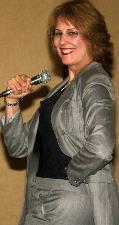
    Humorist Kay FrancesAnti-Aging Psychologist, Dr. Michael Brickey

    Host: Anti-Aging Psychologist Dr. Michael Brickey

    Expert Guest: Motivational Humorist Kay Frances

    Broadcast: 1-26-08 on webtalkradio.net After 2-2-08 the podcast is also on the links below
     
     Stay Young With Humor [38:42m]: Play NowDownload

    A transcript of the interview is at Kay Frances

    Kay is a professional speaker and professional emcee who loves to give a healthy dose of humor. She has a keen interest in health and staying youthful. In her career as a top standup comedienne, she performed in 38 states and even performed for the all male inmates at Riker’s Island prison. She is the host the TV program, Happy Hour with Kay Frances: Health, Humor, and Healing. 

    Posted in aging, anti-aging, commedienne, healing, health, health and wellness, humor, humorist, motivational speaker, story telling, young, youthful | No Comments »